Across the GCC, culture is no longer limited to museums, biennials, and major institutions. Saudi Vision 2030 explicitly calls for a greater variety of cultural venues and entertainment options, while the UAE’s National Strategy for the Cultural and Creative Industries and the Dubai Creative Economy Strategy are designed to expand the cultural sector and strengthen Dubai’s role as a global creative hub. Together, these policies are helping create a market where more spaces are expected to deliver cultural value, not just commercial function.
That shift matters because the region is full of spaces that already have visibility, footfall, and infrastructure, but are underused from a cultural point of view. Shopping malls, airport zones, hospitality venues, corporate headquarters, and temporarily vacant retail units are all increasingly relevant as places where audiences can encounter art, photography, history, innovation, and storytelling. Dubai Culture’s public art and special projects programmes already reflect this broader direction by treating streets, neighbourhoods, and public areas as cultural destinations in their own right.
This is exactly why touring exhibitions in the GCC are becoming one of the most promising growth formats in the region. They offer a flexible way to bring premium cultural programming into places that were never designed to be museums, while avoiding the cost and complexity of permanent cultural construction. That conclusion is an inference, but it is strongly supported by the region’s official cultural strategies and by the increasing importance of experience led placemaking.
The GCC is moving toward experience led destinations
The logic behind travelling exhibitions in the Middle East is simple. The region is investing heavily in destinations, public experience, creative industries, and quality of life. In Saudi Arabia, the cultural sector is framed as part of daily life under Vision 2030. In Dubai, the creative economy strategy aims to increase the contribution of creative industries to GDP and further strengthen the emirate’s position as a global destination for talent, culture, and innovation.
At the same time, real estate and retail are being redefined around experience. Knight Frank has described lifestyle retail as being shaped by experience, culture, and placemaking, while JLL’s Saudi retail reporting shows that major and community retail formats continue to evolve as consumer expectations shift. That creates an opening for formats that do more than sell products. A well designed touring exhibition can give a venue a stronger identity, a reason to visit, and a story worth sharing.
For malls, that can mean higher dwell time and more family appeal. For airports, it can mean turning waiting time into a meaningful cultural experience. For hotels and corporate spaces, it can mean adding prestige, educational value, and a distinctive public facing identity. Touring exhibitions work because they are both cultural and practical. They create atmosphere, but they also solve a venue problem.
Why empty commercial spaces are ideal for temporary exhibitions
One of the biggest opportunities in the region is the adaptive reuse of empty commercial space. Former retail units, vacant showroom floors, unused mall zones, and short term transition spaces are often far more valuable than they appear. They already come with accessibility, visibility, utilities, parking, and an existing visitor context. What they usually lack is concept, curation, and execution.
That is where turnkey exhibitions in the UAE and Saudi Arabia become especially powerful. Instead of waiting for a long term retail tenant or investing in a full architectural redevelopment, operators can activate a space with a high quality temporary exhibition. In the right format, an empty unit can become a photography exhibition, an immersive educational show, a family friendly science or heritage concept, or a branded cultural attraction in a surprisingly short timeframe.
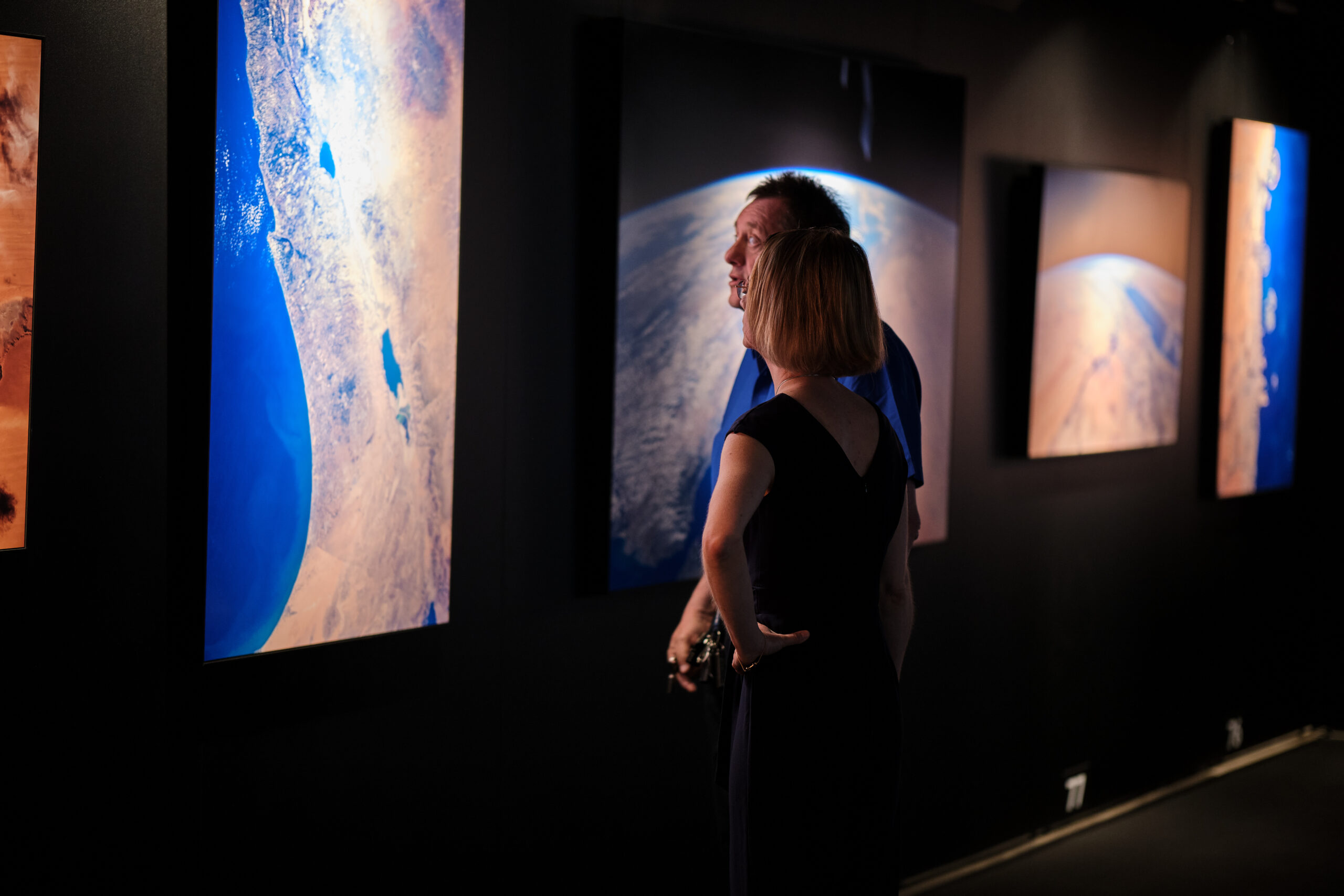
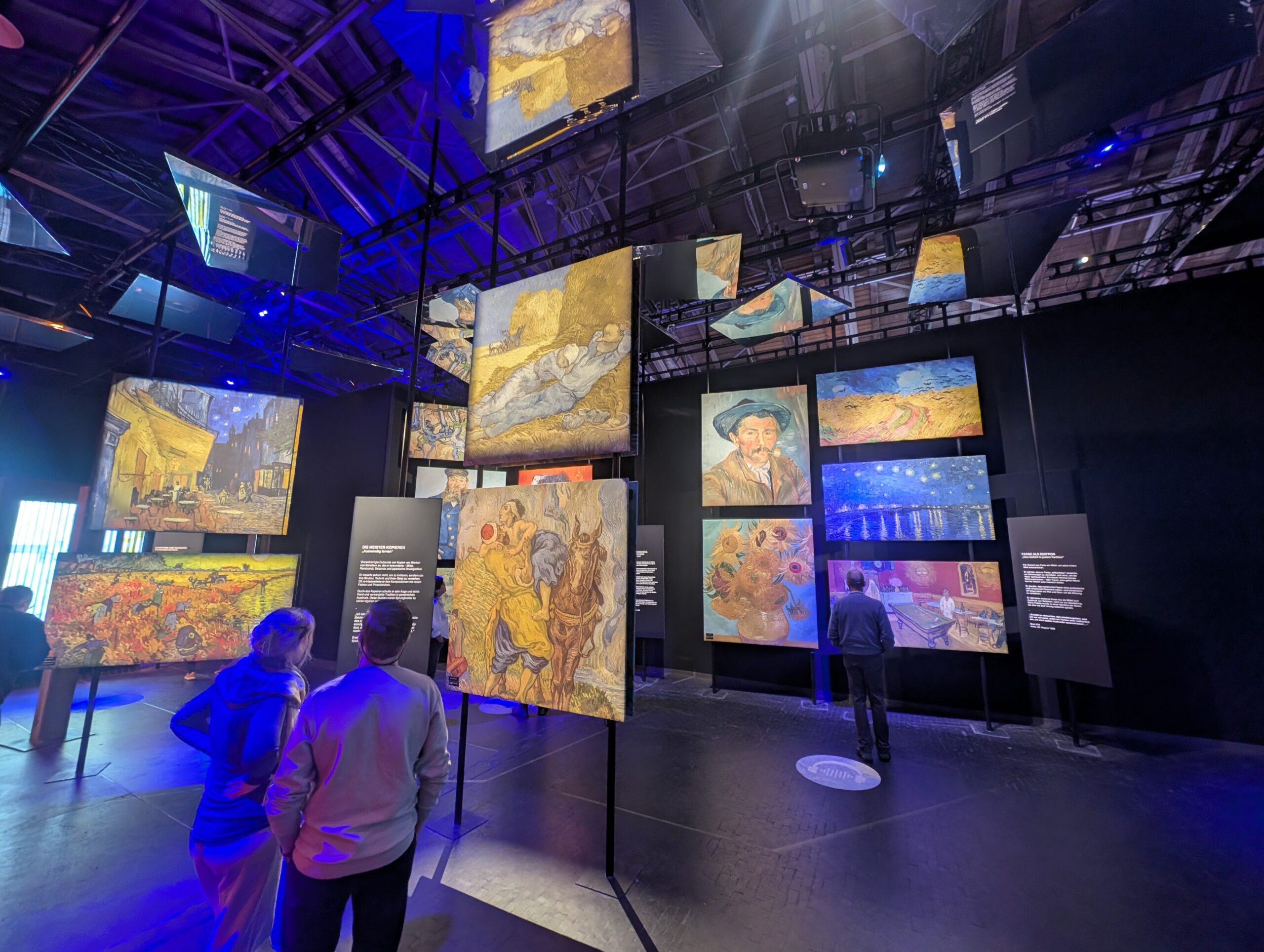
This is particularly attractive in the GCC because the region values presentation, storytelling, hospitality, and premium visitor experience. A darkened former retail unit can become a black box style exhibition environment. A bright open commercial shell can become a modular photography show. A lobby or transit space can become a compact cultural intervention. The key is not the original function of the space. The key is how intelligently it is transformed.
How touring exhibitions can be built quickly into empty spaces
The biggest misconception about exhibitions is that they always require years of planning and a permanent museum setting. In reality, a well designed touring exhibition is built for deployment. The content is prepared in advance. The visitor route is planned. The wall system is modular. Lighting, labels, graphics, and digital interpretation are designed to travel. Once the venue is measured and the format is chosen, the project becomes a rollout rather than a reinvention.
That is what makes temporary exhibitions in Saudi Arabia and the wider GCC so commercially interesting. The venue does not need an in house curatorial department. It does not need to own museum walls or technical systems. It does not need to develop an exhibition narrative from scratch. With the right turnkey partner, the venue can focus on timing, audience, and business goals, while the exhibition operator handles concept adaptation, build, installation, visitor guidance, and deinstallation.
In practical terms, the process is usually straightforward. First, a concept is selected or adapted to the city and audience. Then the available footprint is translated into a floorplan. After that, the modular wall system, lighting, artwork or media, signage, and visitor experience tools are installed. The result is a professional exhibition that can feel permanent to the visitor, even though it is designed to be temporary and scalable.
Why this model is especially strong for the UAE and Saudi Arabia
The UAE and Saudi Arabia are uniquely well suited for touring exhibitions because both markets combine cultural ambition with a strong appetite for new experiences. Saudi Arabia’s national strategy supports more cultural venues and higher quality of life, while Dubai continues to invest in culture, public art, and the broader creative economy. That creates a very favorable environment for exhibition concepts that can move quickly, localize well, and serve multiple venue types.
It also helps that touring exhibitions can be localized without losing their efficiency. Arabic and English interpretation, regionally relevant themes, education friendly storytelling, and scalable layouts make them highly adaptable. A concept can open in one format in Dubai, appear in another version in Riyadh, and then continue into a mall, museum, airport, or mixed use destination elsewhere in the GCC. That kind of flexibility is difficult to match with a static exhibition model.
For landlords, venue owners, developers, and public institutions, this is a compelling proposition. It reduces risk, shortens timelines, activates dead space, and creates a premium visitor product. For audiences, it brings culture into places they already frequent. For brands and cities, it turns ordinary square meters into memorable destinations.
The future of cultural activation in the GCC
Touring exhibitions are not a niche side format anymore. They are becoming one of the smartest ways to deliver culture at speed, with flexibility, and at real estate scale. In a region where culture, placemaking, tourism, and visitor experience are increasingly connected, the ability to transform empty commercial space into a museum quality attraction is a major advantage.
The next big opportunity in the GCC is not only building new cultural landmarks. It is also reimagining the spaces that already exist. That is why touring exhibitions, travelling exhibitions, and turnkey cultural concepts are likely to become a far more important part of the region’s cultural and commercial landscape in the years ahead.
For venues that want to stand out, the question is no longer whether culture belongs in commercial space. The question is which exhibition concept should open there first.
Whether you want to activate a vacant retail unit, introduce a museum quality exhibition to your venue, or bring a licensed concept to the Middle East, Ready to Show Art can help. We create and deliver turnkey touring and immersive exhibitions tailored to the GCC market. Get in touch at office@readytoshow.art to discuss your project.